
NDT Training
Non-Destructive Testing Training for Defence, Naval & Industrial Applications
NANTIA delivers structured NDT training aligned to SNT-TC-1A, NAVSEA, and ISO 9712. From entry-level qualification through to advanced methods and refresher training - designed to produce technicians who are boat-ready and capable from day one.
NDT Training Built from Real Naval Operations
Training developed through 15 years of submarine NDT experience, not a textbook.
NANTIA's non-destructive testing training methodology was developed through 15 years of NDT and inspection delivery on Australia's Collins Class submarine fleet. Every training pathway is built around the actual requirements of the platforms and programs our students will work on.
This means NANTIA NDT training goes beyond standard certification syllabi. Our technicians are trained in boat readiness, naval architecture terminology, defect recognition specific to naval and industrial materials, and the practical realities of confined-space inspection work.
The result is NDT technicians who contribute from the day they step onto a platform - not after months of on-the-job learning. Whether training new entrants or upskilling existing personnel, NANTIA produces workforce capability that is genuinely ready for defence and industrial applications.
NDT training is available face-to-face at our facilities, through our online LMS, and via VR NDT simulation for immersive pre-training exposure.
NDT Training Methods
Comprehensive non-destructive testing training across all major inspection methods.
Ultrasonic Testing (UT) Training
Ultrasonic testing training from entry-level through to advanced techniques including Phased Array UT (PAUT). Covers thickness measurement, flaw detection, weld inspection, and acceptance criteria for naval and industrial applications.
Radiographic Testing (RT) Training
Radiographic testing training covering film and digital radiography, radiation safety, image interpretation, and weld assessment. Aligned to NAVSEA and SNT-TC-1A requirements for defence programs.
Magnetic Particle Testing (MT) Training
Magnetic particle testing training for surface and near-surface discontinuity detection. Covers AC and DC techniques, wet and dry methods, and the practical application of MT on naval and industrial components.
Liquid Penetrant Testing (PT) Training
Liquid penetrant testing training for surface-breaking discontinuity detection. Covers visible and fluorescent techniques, process control, and acceptance criteria for defence and industrial specifications.
Eddy Current Testing (ET) Training
Eddy current testing training for surface and subsurface inspection of conductive materials. Covers impedance plane analysis, probe selection, and application to aerospace, defence, and industrial components.
Visual Testing (VT) Training
Visual testing training covering direct and remote examination, weld inspection criteria, corrosion assessment, and the documentation standards required for defence and quality-managed programs.
Standards-Aligned NDT Training Pathways
SNT-TC-1A NDT Training
Personnel qualification and certification training aligned to ASNT SNT-TC-1A - the industry standard for NDT personnel qualification in the US. Covers Level I, Level II, and Level III development pathways.
NAVSEA NDT Training
Training aligned to NAVSEA Technical Publication T9074-AS-GIB-010/271 requirements for naval shipbuilding and repair NDT. Essential for organisations working on US naval programs.
ISO 9712 NDT Training
Learning pathways aligned to ISO 9712 certification frameworks, supporting international recognition and workforce mobility. NANTIA is pursuing AINDT Authorised Qualifying Body (AQB) status.
NDT Refresher Training
Ongoing refresher training aligned to requalification cycles and evolving program requirements across SNT-TC-1A, NAVSEA, and ISO 9712. Available face-to-face and through the online LMS.
NDT Training Delivery Modes
Face-to-Face NDT Training
Delivered at NANTIA's training facility near the Osborne Naval Precinct in Adelaide, South Australia, and through the NDT Centre of Excellence in Hampton Roads, Virginia. Face-to-face training includes hands-on practical sessions with real materials and real defects.
Online NDT Training (LMS)
NANTIA's online learning management system delivers structured NDT training that can be accessed remotely, tracked for compliance, and integrated with practical assessment requirements. Suitable for distributed workforces and refresher training.
VR NDT Simulation
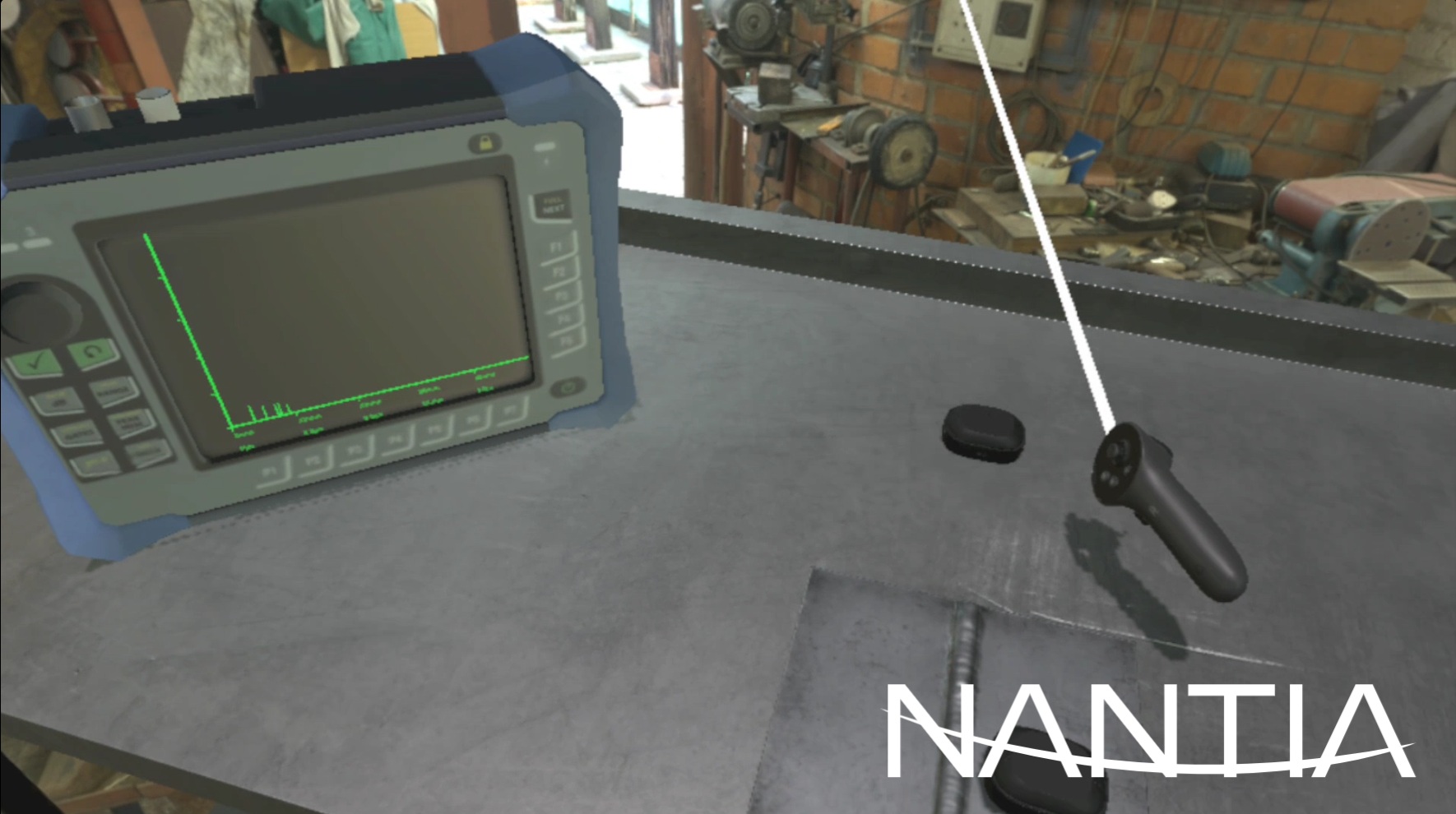
The NANTIA VR NDT Lab Simulator provides immersive, scenario-based training using virtual environments modelled on real industrial components. Students experience realistic inspection conditions before entering the field.
NDT Workforce Development & Upskilling
Entry-Level NDT Training
Structured pathways from new entrant through to Level II qualification. Designed to produce NDT technicians who are genuinely ready for naval and industrial platforms - not just certified, but boat-ready.
Cross-Skilling Existing NDT Personnel
Expanding existing technician capability into additional NDT methods or standards frameworks. Cross-skilling increases the range of work each technician can perform and reduces dependence on external services.
Level II to Level III Development
Structured development pathways for experienced NDT Level II technicians progressing toward Level III qualification and responsibility.
Boat Readiness Training
Supplementary training covering naval architecture terminology, material behaviour, confined-space awareness, and the practical realities of working on a submarine or naval vessel. Training that goes well beyond standard NDT syllabi.
Related NDT Services
Online NDT Training & LMS
Remote NDT training through a structured learning management system with progress tracking, assessment, and auditable records for distributed workforces.
Learn more →VR NDT Lab Simulator
Immersive virtual reality NDT training using real materials and real defects. Reduce cold-start time and build practical confidence before entering the field.
Learn more →NDT Level III Services
ASNT Level III technical oversight including procedure approval, written practice support, audit preparation, examiner functions, and certifying authority.
Learn more →NDT Centre of Excellence
A dedicated NDT capability hub for Hampton Roads - face-to-face training, workforce pipelines, cross-skilling, LMS, VR simulation, and surge inspection capacity.
Learn more →NDT Training - Frequently Asked Questions
What NDT training methods does NANTIA offer?
NANTIA offers training across all major NDT methods: Ultrasonic Testing (UT), Radiographic Testing (RT), Magnetic Particle Testing (MT), Liquid Penetrant Testing (PT), Eddy Current Testing (ET), and Visual Testing (VT). Training is available from entry-level through to advanced qualifications including Phased Array UT (PAUT).
Is NANTIA NDT training aligned to SNT-TC-1A?
Yes. NANTIA NDT training curriculum is aligned to ASNT SNT-TC-1A, the industry standard for NDT personnel qualification in the United States. Training also aligns to NAVSEA requirements and ISO 9712 certification pathways.
Does NANTIA offer NAVSEA NDT training?
NANTIA training is aligned to NAVSEA Technical Publication T9074-AS-GIB-010/271 requirements for naval shipbuilding and repair NDT. This includes method-specific training, procedure qualification, and the standards knowledge required for naval programs.
Can I do NDT refresher training with NANTIA?
Yes. NANTIA provides NDT refresher training aligned to requalification cycles and evolving requirements across SNT-TC-1A, NAVSEA, and ISO 9712. Refresher training is available face-to-face, through the online LMS, or as a combination.
Where is NANTIA NDT training available?
NANTIA delivers NDT training in Adelaide, South Australia (near the Osborne Naval Precinct) and is establishing a Centre of Excellence in Hampton Roads, Virginia. Online NDT training through the LMS is available to students anywhere.
Does NANTIA offer ISO 9712 NDT training?
NANTIA provides ISO 9712-aligned training pathways. NANTIA is in the final stages of becoming an AINDT Authorised Qualifying Body (AQB) for formal ISO 9712 qualification and certification of NDT personnel.